Glycerin for Skin: Benefits, Usage, Myths & Film Industry Secrets
Is glycerin natural or chemical? Does it really hydrate the skin, and is it safe to apply directly? Discover the science, benefits, side effects, and even its use in movie scenes.

In today’s skincare world, glycerin is everywhere. From moisturizers and serums to soaps and even film sets, this simple ingredient has been trusted for over two centuries.
First discovered in 1779, glycerin has remained one of the most reliable hydration ingredients in cosmetic and medical formulations.
But what exactly is glycerin? Is it natural or chemical? Does it really hydrate the skin? And why is it used to create tears in movies?
Let’s explore.
What Is Glycerin?
Glycerin, also known scientifically as Glycerol, is a clear, odorless, slightly sweet liquid.
It is a chemical compound, but that does not mean it is harmful.
Glycerin can be:
- Naturally derived from plant oils like coconut or palm
- Obtained as a by-product during soap making
- Manufactured synthetically
So yes, it is a chemical. But it is also naturally derived. Water is a chemical too. The word “chemical” is not the villain.
Since When Are People Using It?
Glycerin was discovered in 1779 by Swedish chemist Carl Wilhelm Scheele.
Since the 19th century, it has been used in:
- Pharmaceuticals
- Ointments
- Soaps
- Cosmetic creams
It became popular because of one important property: it attracts moisture.
How Does Glycerin Work on Skin?
Our skin has three main layers:
- Epidermis
- Dermis
- Hypodermis
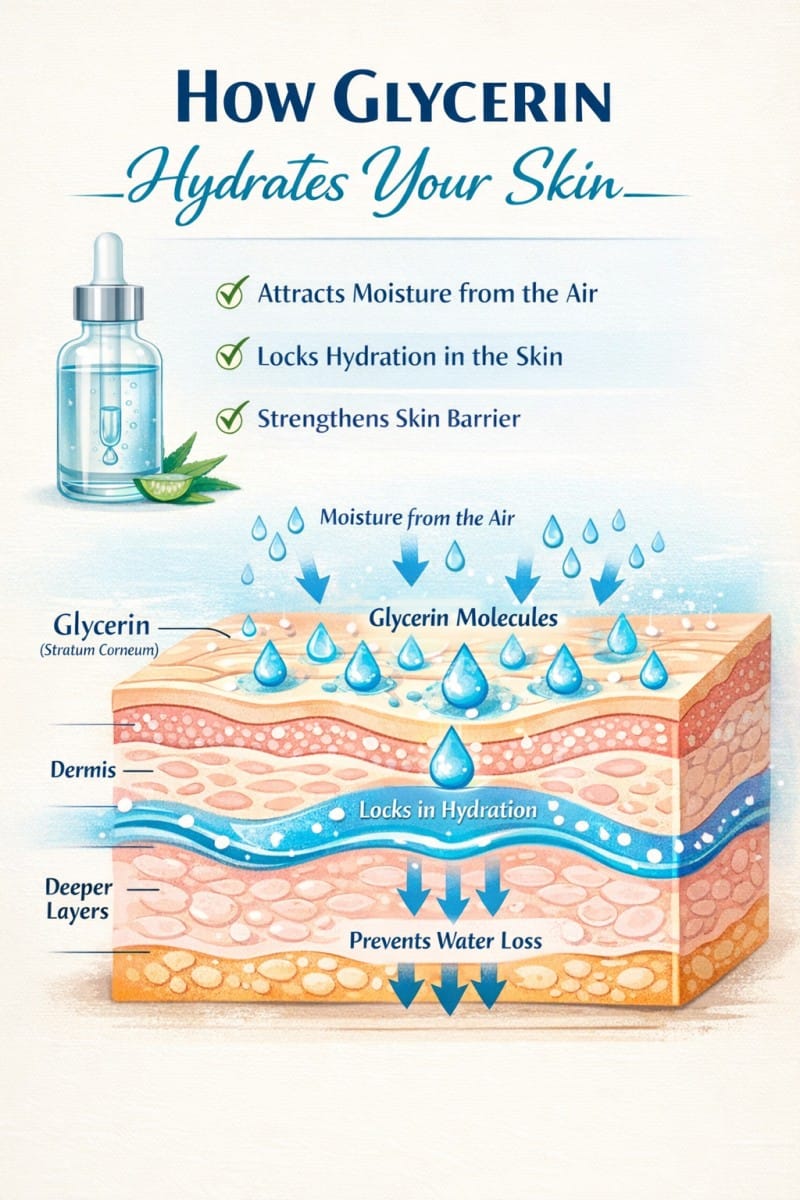
Glycerin mainly works on the outermost layer of the epidermis called the stratum corneum.
It does not deeply penetrate into the bloodstream. Instead, it:
- Attracts water
- Reduces moisture loss
- Improves skin barrier function
- Keeps skin soft and flexible
Studies available on National Center for Biotechnology Information show that glycerin helps reduce transepidermal water loss and supports barrier repair.
In simple words: your skin accepts glycerin well because it helps maintain hydration balance.
Is Glycerin Good or Bad for Skin?
Good When Used Properly
- Mixed with water or rose water
- Applied on slightly damp skin
- Used in moderate quantity
- Sealed with a moisturizer
Benefits:
- Deep hydration
- Softens rough skin
- Helps with cracked heels
- Supports healing in dry weather
When It Can Cause Problems
- Used in very high concentration
- Applied pure in extremely dry climate
- Used excessively
- Sensitive skin without patch test
Always do a patch test before regular use.
Can You Apply Glycerin Directly?
You can, but it is better diluted.
Safe options:
- 1 part glycerin + 3–4 parts rose water
- Mix with aloe vera gel
- Add few drops into your night moisturizer
Avoid heavy application before direct sun exposure.
Does Glycerin Contain Vitamin E?
Pure glycerin does not contain Vitamin E.
Some skincare products combine both, but glycerin itself is only a humectant.
Why Is Glycerin Used in Transparent Soap?
In soap making, glycerin helps improve moisture retention.
In transparent soaps, alcohol and sugar are often added with glycerin to:
- Increase clarity
- Reduce crystal formation
- Improve transparency
That is why transparent soaps are often called “glycerin soaps.”
Film Industry Secret: Is Glycerin Used for Tears?
Yes.
In movies, glycerin is often used to create artificial tears during emotional scenes. It causes mild eye watering and helps actors produce consistent tear effects.
It is commonly used in both Hollywood and Bollywood film production.
Of course, this is done carefully and in controlled amounts.
Possible Side Effects
Although generally safe, glycerin may cause:
- Mild irritation (rare)
- Sticky feeling
- Redness in very sensitive skin
If irritation occurs, discontinue use and consult a dermatologist.
Glycerin vs Hyaluronic Acid: Which Is Better for Skin?
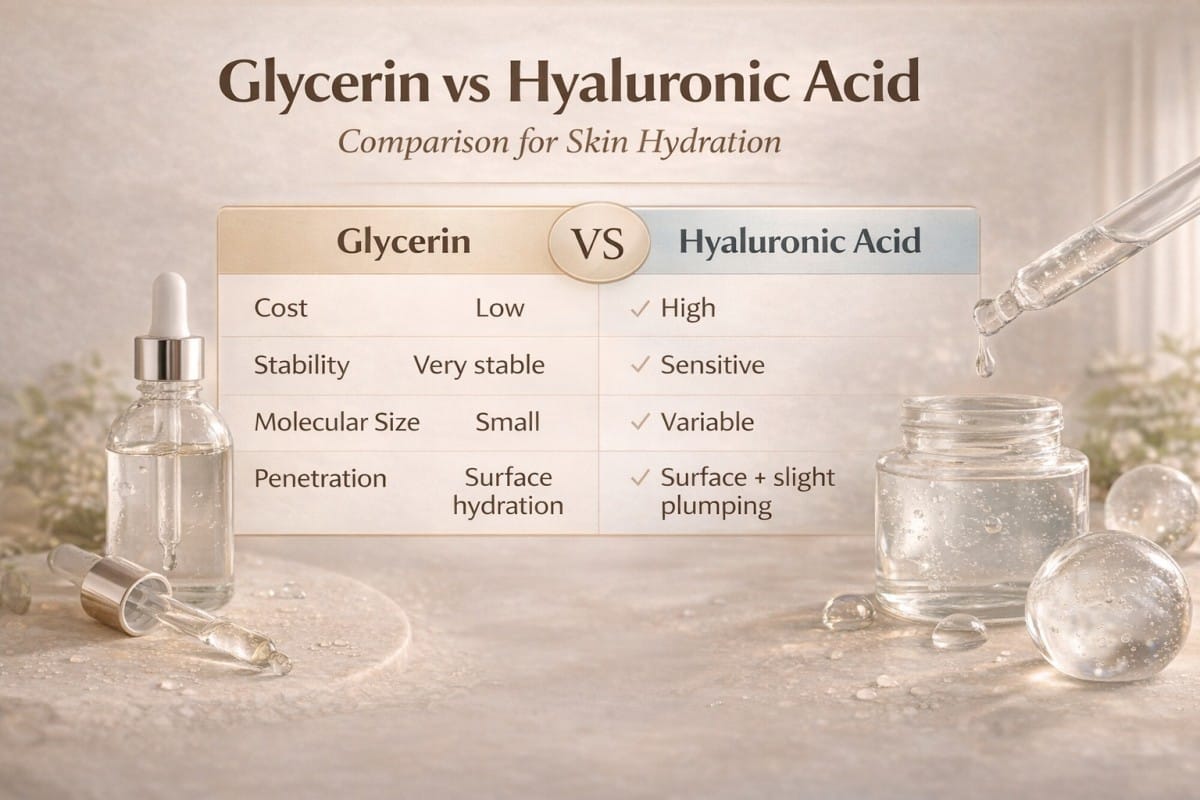
| Feature | Glycerin | Hyaluronic Acid |
|---|---|---|
| Cost | Low | High |
| Stability | Very stable | Sensitive to formulation |
| Molecular Size | Small | Variable |
| Penetration | Surface hydration | Surface + slight plumping |
| Best For | Daily basic hydration | Plumping + anti-aging focus |
Glycerin is a small, stable humectant that draws water into the outer layer of the skin. It works consistently in most climates and formulations.
Hyaluronic acid can hold more water by weight, but it is more sensitive to formulation and environmental conditions. It is often marketed for plumping and anti-aging benefits.
In many skincare products, both ingredients are used together for balanced hydration.
Medical Disclaimer
This article is for informational purposes only and does not constitute medical advice. Please consult a qualified dermatologist or healthcare professional before starting any new skincare treatment, especially if you have sensitive skin, allergies, or existing medical conditions.
Final Thoughts
Glycerin is one of the simplest yet most effective skincare ingredients available. It is affordable, widely used, and scientifically supported for hydration and barrier repair.
When used properly and in the right concentration, it can be a reliable addition to your skincare routine.
Sometimes the most powerful solutions are the simplest ones.
📌 References (Credible Sources)
- National Center for Biotechnology Information – Humectants & Skin Barrier
https://pubmed.ncbi.nlm.nih.gov/?term=glycerin+skin+moisturization - Wikipedia – Glycerol (general overview)
https://en.wikipedia.org/wiki/Glycerol - American Academy of Dermatology – Moisturizing Tips
https://www.aad.org/public/everyday-care/skin-care-basics/dry/why-moisturize - DermNet NZ – Glycerin in skincare
https://dermnetnz.org/topics/glycerin - Healthline – Is Glycerin Good for Your Skin?
https://www.healthline.com/health/beauty-skin-care/glycerin-for-skin
❓ Frequently Asked Questions (FAQs)
Q1. What exactly is glycerin?
A: Glycerin (also called glycerol) is a clear, odorless liquid that acts as a humectant, meaning it draws moisture to the skin. It can be naturally derived from plant oils or made synthetically.
Q2. Is glycerin natural or chemical?
A: It is both. Glycerin is a chemical compound, but it can be naturally sourced from plants or fats. Calling it “chemical” does not mean it is harmful.
Q3. How long has glycerin been used?
A: Glycerin was discovered in 1779, so it has been used in skincare, soaps, and pharmaceuticals for over two centuries.
Q4. Does glycerin actually hydrate the skin?
A: Yes. Glycerin attracts moisture from the environment and helps keep the outer skin layer (stratum corneum) hydrated and soft.
Q5. Can I apply glycerin directly on my skin?
A: You can, but it’s better to dilute it with water, rose water, or aloe vera gel for smoother application and fewer sticky feelings.
Q6. Is glycerin good for all skin types?
A: It is generally safe for most skin types, including sensitive and dry skin. However, in extremely dry climates or very high concentrations, it may feel sticky or draw moisture from deeper layers.
Q7. Does glycerin contain Vitamin E?
A: No. Pure glycerin does not contain vitamin E. Some skincare products combine glycerin and vitamin E, but that is because the product was formulated that way, not because glycerin naturally contains it.
Q8. Why is glycerin used in transparent soaps?
A: In transparent soap making, glycerin + alcohol + sugar help create clarity by preventing crystal formation and improving transparency. That’s why such soaps are often marketed as “glycerin soaps.”
Q9. Is it true movie makers use glycerin for fake tears?
A: Yes. Film and TV productions often use a diluted form of glycerin to create tear effects because it induces mild eye watering safely when applied properly.
Q10. Are there any side effects?
A: Side effects are rare but may include mild irritation or redness in sensitive individuals. Always do a patch test first and consult a dermatologist for any serious concerns.