Humectants in Skincare: The Science of Hydrated, Plump & Glass Skin in 2026
Humectants are the real secret behind plump, bouncy and glowing skin. In this ultimate guide, discover what humectants are, how they work, the best ones in 2026 (including Polyglutamic Acid), benefits, side effects, and expert layering tips for all skin types.

Introduction
If your skin feels tight, dull, or dehydrated even after applying moisturizer, chances are you’re missing the most important piece of the hydration puzzle — humectants.
In 2026, humectants have become the cornerstone of modern skincare. From hyaluronic acid to the rising star Polyglutamic Acid, these powerful water-magnets are helping people achieve that coveted “glass skin” look.
In this detailed guide, you’ll learn everything about humectants — how they work, which ones are best, and exactly how to use them for maximum results.
What Are Humectants?
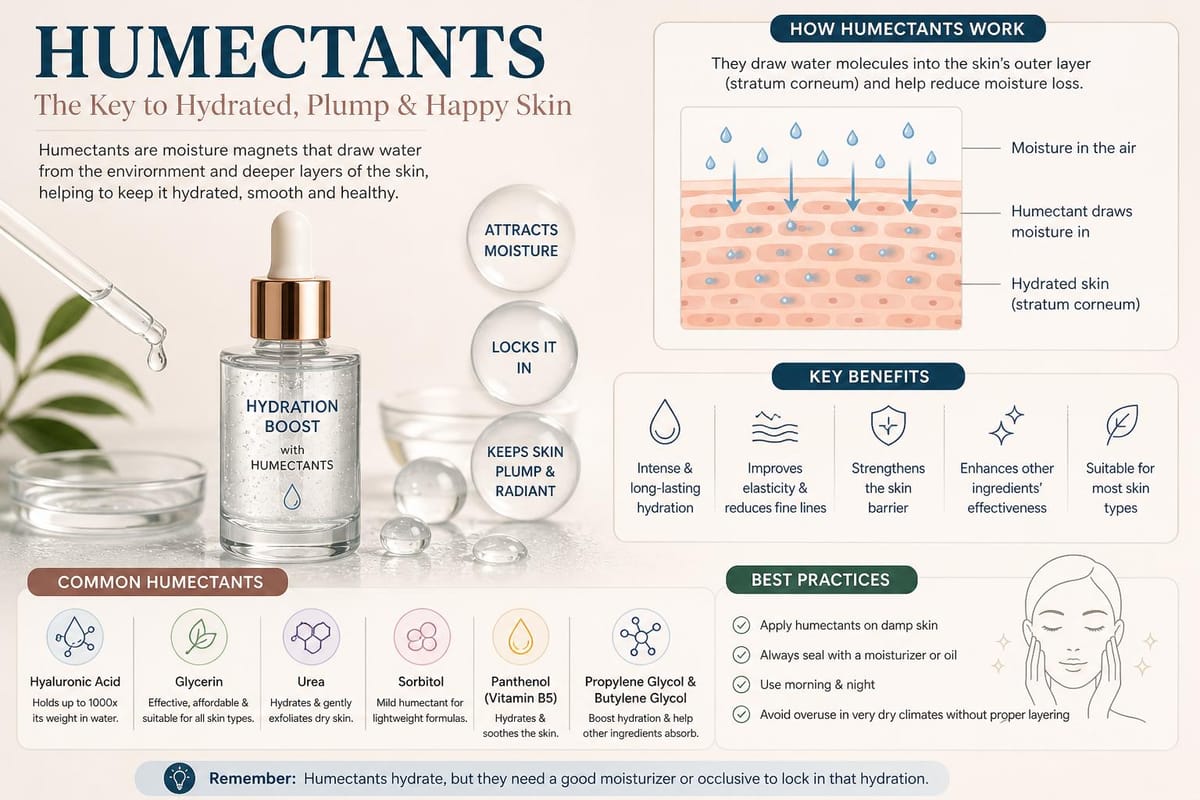
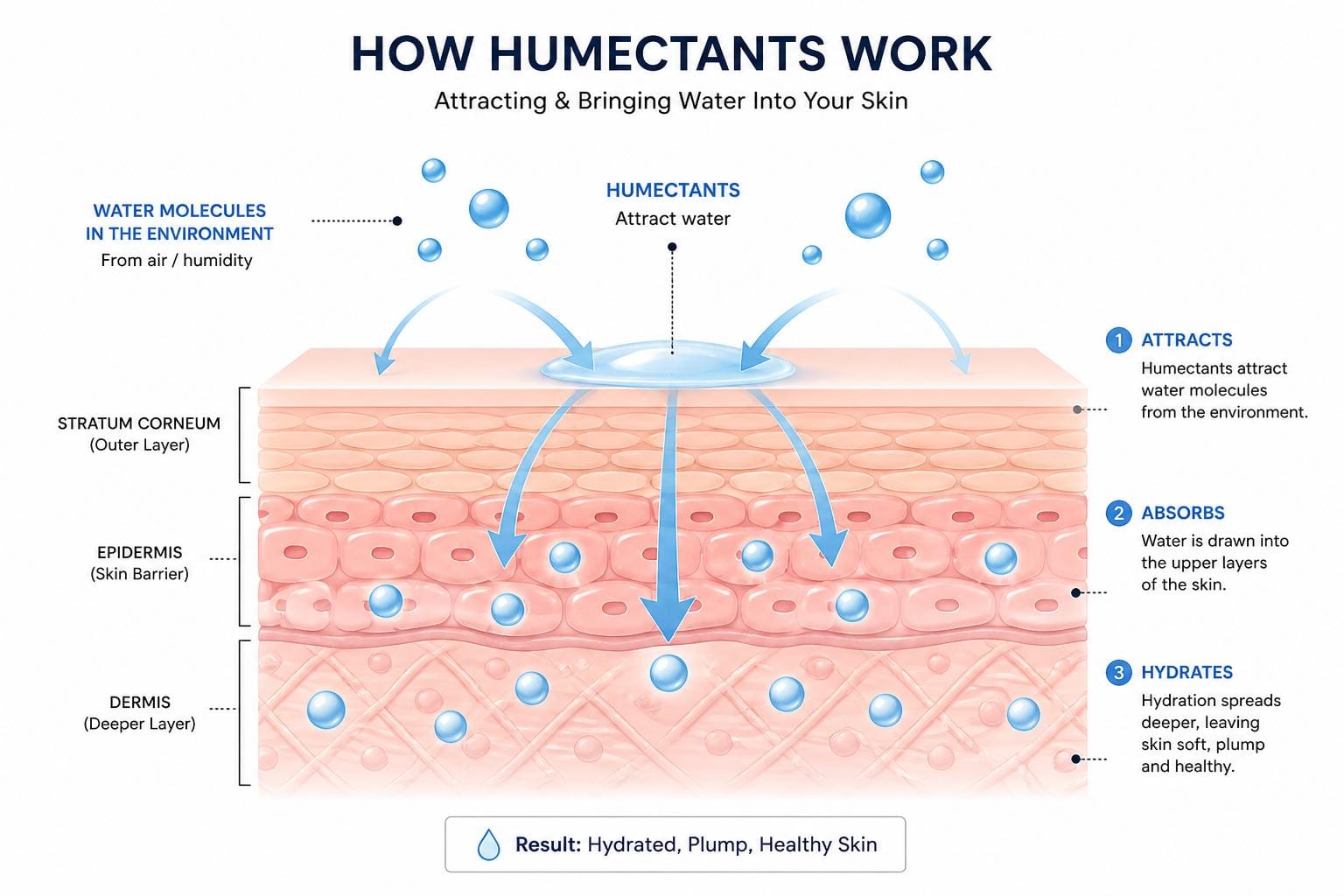
Humectants are skincare ingredients that attract and bind water molecules from the deeper layers of the skin or from the environment (air) into the outer layer of the skin (stratum corneum).
They are hygroscopic by nature — meaning they act like magnets for moisture.
Popular Humectants in 2026:
- Hyaluronic Acid (HA)
- Glycerin
- Polyglutamic Acid (PGA)
- Urea
- Panthenol (Vitamin B5)
- Sorbitol
- Beta-Glucan
How Do Humectants Work?
Humectants pull water into the skin through a process called hygroscopy. However, here’s the catch most people miss:
Humectants alone can sometimes make skin feel drier in low-humidity environments because they pull moisture from deeper layers if not sealed properly.
This is why dermatologists always recommend the Layering Rule:
Humectant → Emollient → Occlusive
Humectants vs Emollients vs Occlusives (Must-Know)
| Type | Function | Examples | Best For |
|---|---|---|---|
| Humectants | Attract & hold water | HA, Glycerin, PGA | All skin types |
| Emollients | Soften & smooth skin | Ceramides, Squalane, Oils | Dry, Sensitive |
| Occlusives | Lock moisture in (barrier) | Petrolatum, Dimethicone | Very dry skin |
Best Humectants for Skin
1. Hyaluronic Acid (HA)
- Holds up to 1000x its weight in water
- Provides instant hydration and plumping
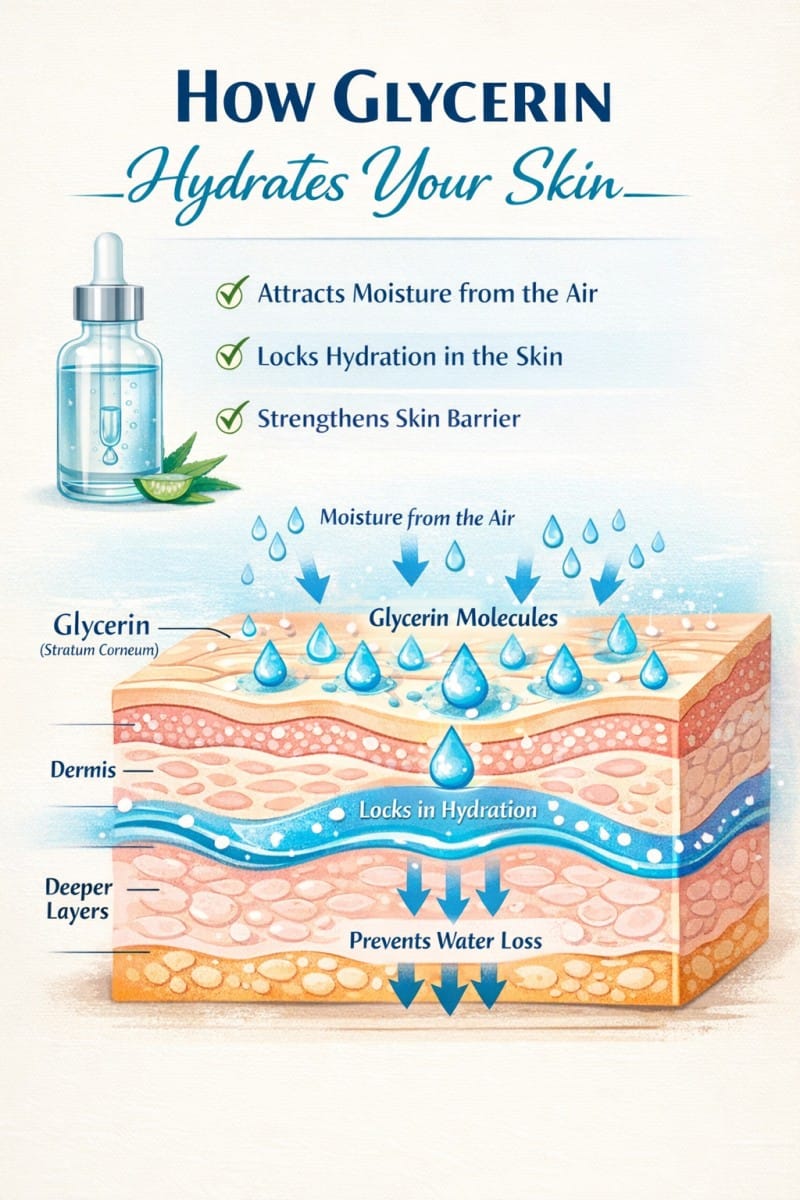
2. Glycerin
- One of the most effective and reliable humectants
- Works even in low humidity
Glycerin for Skin: Benefits, Usage, Myths & Film Industry Secrets
3. Urea
- Hydrates and gently exfoliates
- Ideal for rough, dry skin
4. Panthenol (Vitamin B5)
- Soothes irritation while hydrating
- Supports barrier repair
5. Propylene Glycol & Butylene Glycol
- Lightweight humectants
- Help other ingredients absorb better
Humectants vs Occlusives vs Emollients
Understanding this is where most people mess up their skincare.
Humectants
- Draw water into the skin
- Examples: hyaluronic acid, glycerin
Emollients
- Smooth and soften the skin
- Fill gaps between skin cells
Occlusives
- Create a barrier to prevent water loss
- Examples: oils, waxes, petrolatum
Simple Breakdown
- Humectants = bring water
- Emollients = smooth skin
- Occlusives = lock moisture
👉 For best results, you need all three.
The Rising Star: Polyglutamic Acid (PGA) – The Next Big Thing in 2026
While Hyaluronic Acid has ruled the humectant space for years, a strong new competitor has stepped in — Polyglutamic Acid (PGA).
What is Polyglutamic Acid?
Polyglutamic Acid is a natural, water-soluble polymer derived from fermented soybeans or specific bacteria.
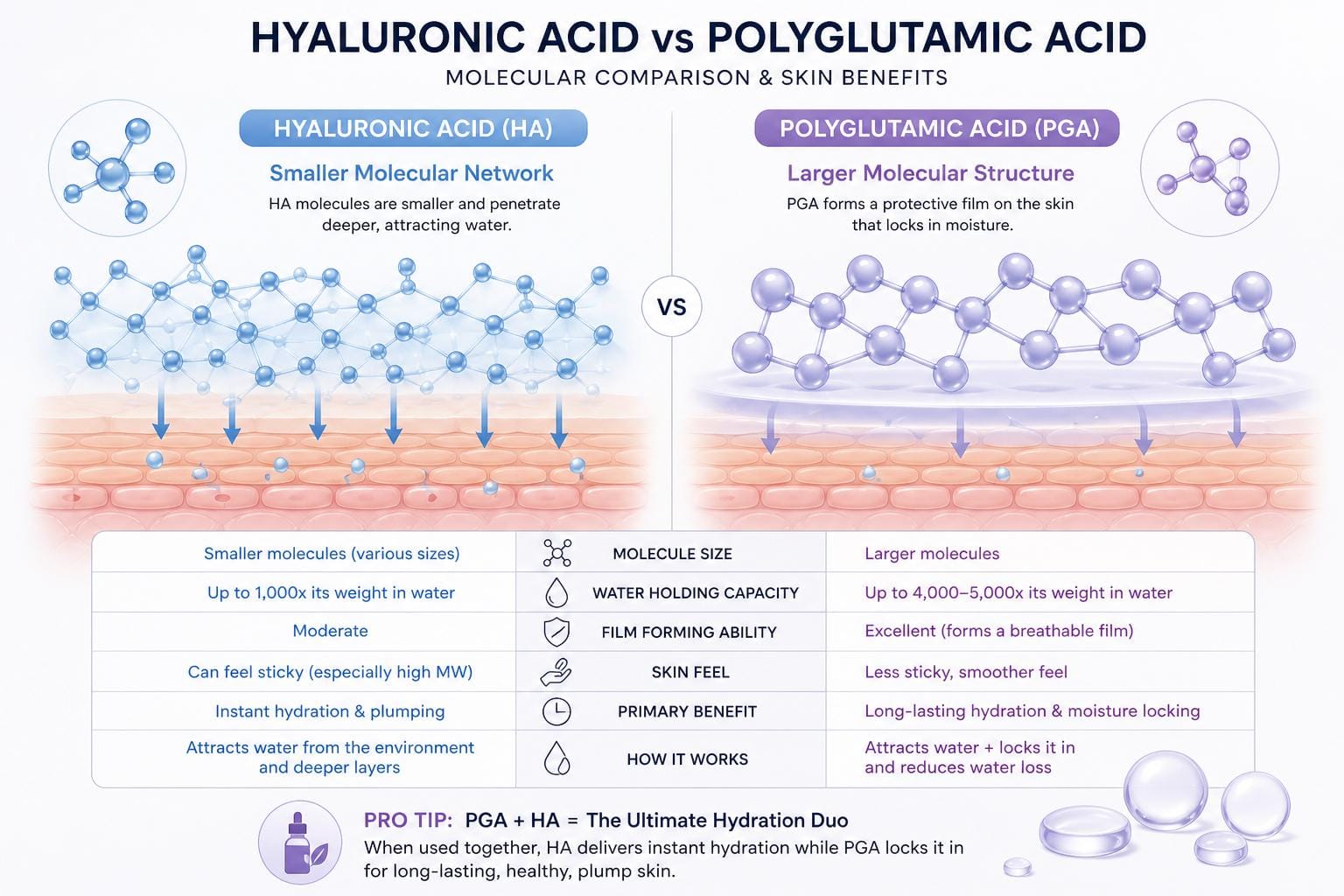
It has a larger molecular structure compared to Hyaluronic Acid, and this difference gives it several unique skincare advantages.
Why PGA is Creating Buzz in 2026
Superior Water Retention
PGA can hold significantly more water than Hyaluronic Acid in some studies (up to 4–5x more), making it a powerful hydration booster.
Film-Forming Ability
It forms a thin, breathable layer on the skin that helps reduce transepidermal water loss and keeps moisture locked in for longer durations.
Better Moisture Locking
Unlike Hyaluronic Acid, which primarily attracts water, PGA also helps retain and seal hydration within the skin.
Gentle on Skin
It is often better tolerated by sensitive skin types and tends to feel less sticky or heavy compared to high-molecular-weight HA.
Supports Natural Hyaluronic Acid
PGA may help protect the skin’s natural hyaluronic acid levels, supporting long-term hydration balance.
Hyaluronic Acid vs Polyglutamic Acid
| Feature | Hyaluronic Acid | Polyglutamic Acid |
|---|---|---|
| Water Holding Capacity | Excellent (up to 1000x) | Higher (up to 5000x in some studies) |
| Molecular Size | Small to large variants | Larger molecule |
| Film Forming | Moderate | Strong |
| Skin Feel | Can feel slightly sticky | Generally lighter and less sticky |
| Primary Benefit | Instant hydration & plumping | Long-lasting moisture retention |
How to Use Polyglutamic Acid
For best results, Polyglutamic Acid works extremely well when combined with Hyaluronic Acid.
Many modern skincare formulations in 2026 now include this combination for enhanced hydration performance.
Pro Tip: Look for serums labeled as “Multi-Molecular Weight PGA” or “PGA + HA Complex” for maximum hydration benefits.
Why Your Skin Still Feels Dry After Moisturizer
If your skin feels dry even after applying products, here’s why:
1. No Humectants in Your Routine
Your product may lack true hydration ingredients.
2. Applying on Dry Skin
Humectants need water to work.
👉 Always apply on damp skin
3. Not Sealing the Moisture
Water evaporates quickly without an occlusive.
4. Dry Environment (AC, Weather)
Low humidity reduces effectiveness.
5. Overuse of Active Ingredients
Retinol and acids can weaken the skin barrier.
Key Benefits of Humectants
- Provide deep and long-lasting hydration
- Improve skin elasticity and reduce the appearance of fine lines
- Strengthen the skin barrier
- Enhance the performance of other skincare ingredients
- Suitable for most skin types when used correctly
Potential Side Effects (And How to Avoid Them)
Humectants are generally safe, but in very dry conditions, they may pull moisture from deeper skin layers instead of the air.
How to avoid this:
- Apply on damp skin
- Always follow with a moisturizer or oil
- Avoid overuse in extremely dry climates
How to Use Humectants by Skin Type
Dry Skin
Use high-concentration humectants with a rich moisturizer and facial oil.
Oily / Acne-Prone Skin
Choose lightweight humectant serums (like hyaluronic acid) and avoid heavy creams.
Combination Skin
Apply humectants to dry areas and use oil-control products on the T-zone.
Best Practices
- Apply humectants on damp skin for better absorption
- Always seal with a moisturizer or oil
- Use both morning and night
- Avoid overuse in very dry climates without proper layering
Conclusion
Humectants are essential for maintaining hydrated, healthy skin. When used correctly and combined with proper layering, they can significantly improve skin texture and appearance. Consistency matters more than expensive products.
Key Takeaways
- Apply humectants on damp skin
- Always seal with a moisturizer or oil
- Choose products based on your skin type
- Consistency is more important than product price
FAQs
What are humectants?
Humectants are ingredients that attract and retain moisture from the environment and deeper layers of the skin, helping to keep the skin hydrated.
How do humectants work?
They draw water into the outer layer of the skin (stratum corneum), improving hydration and reducing moisture loss. They do not form a protective barrier on their own.
What are common humectants in skincare?
Common examples include hyaluronic acid, glycerin, urea, sorbitol, panthenol, and glycols like propylene glycol.
What are the benefits of humectants?
They improve skin hydration, maintain softness and smoothness, support the skin barrier, and enhance the effectiveness of other skincare ingredients.
Are there any side effects of humectants?
Humectants are generally safe, but in very dry conditions, they may draw moisture from deeper skin layers, leading to dryness if not sealed with a moisturizer. Irritation is rare but possible in sensitive skin.
Who should use humectants?
Humectants are suitable for all skin types, including dry, oily, and sensitive skin, when used in the right formulation.
How should humectants be used with other ingredients?
For best results, apply humectants on damp skin and follow with an occlusive or moisturizer (like oils or ceramides) to lock in hydration.
⚠️ Caution & Disclosure
The information in this article is for educational purposes only and is not intended as medical advice. Skincare results can vary depending on individual skin type, environment, and underlying conditions. If you have sensitive skin, allergies, or persistent skin concerns, consult a qualified dermatologist before introducing new products or ingredients into your routine.
Always perform a patch test before using new skincare products to avoid irritation or adverse reactions.
🔗 External References & Dermatology Sources
To ensure accuracy and credibility, the information in this article is supported by well-established dermatology and medical resources:
- Harvard Health Publishing – Moisturizers and how they work
- American Academy of Dermatology – Skincare basics and hydration science
- National Center for Biotechnology Information – Studies on humectants like glycerin and urea
- WebMD – Overview of humectants and skin hydration
- Cleveland Clinic – Skin barrier and moisture retention