Why Lips Crack in Winter: Causes and Effective Solutions
Why do lips crack in winter? Since lips lack oil glands, they are extra vulnerable to dry air. Explore the best solutions and lifestyle habits to keep your lips hydrated and soft.


Cracked lips are a very common problem during winter and cold weather. Dry air, low humidity, and lifestyle habits can strip moisture from the lips, making them dry, painful, and sometimes even bleeding. Since lips do not have oil glands, they are more vulnerable to dryness than other parts of the skin.
Reasons Why Lips Crack in Cold Weather
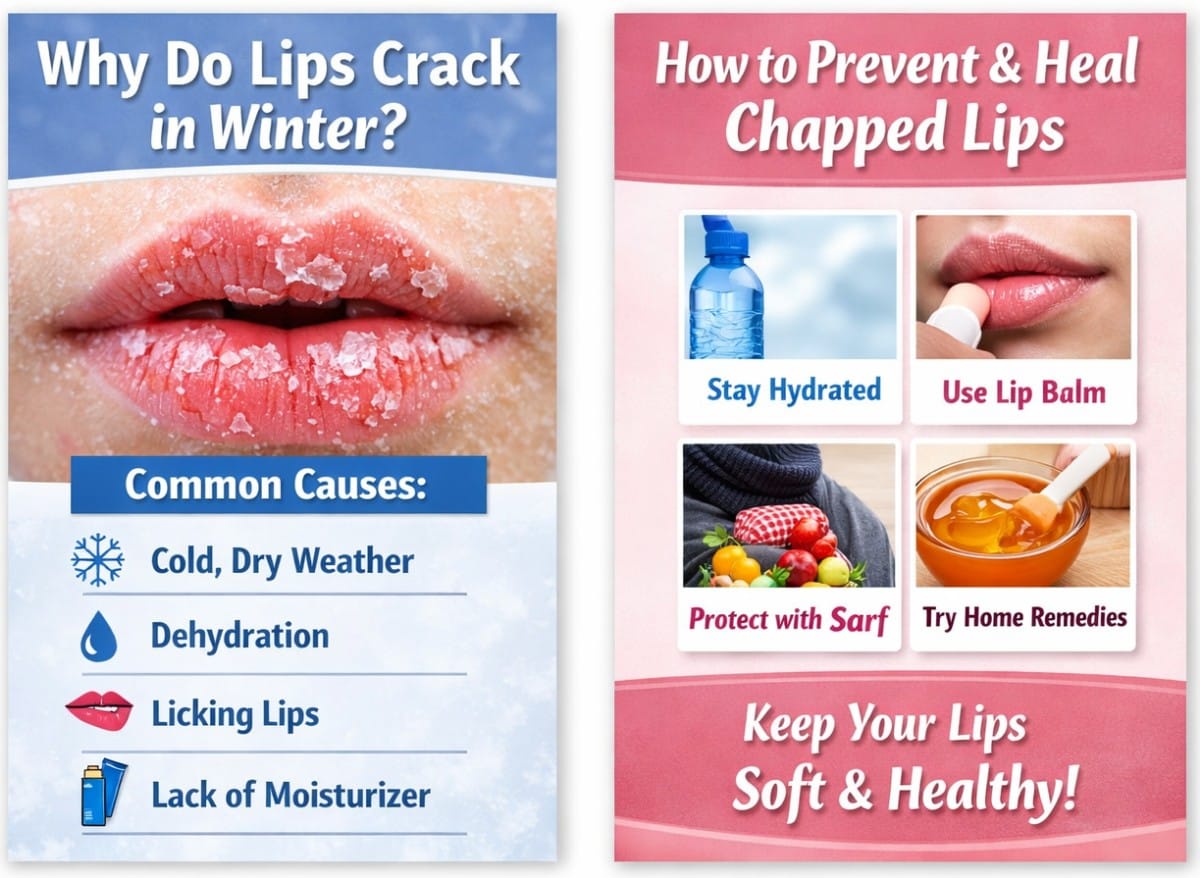
1. Dry and Cold Air
During winter, the air holds less moisture. Cold winds and low humidity pull moisture from the lips, causing them to dry out and crack easily.
2. Lack of Oil Glands
Unlike the rest of the skin, lips do not have sebaceous (oil) glands. This means they cannot naturally moisturize themselves, making them prone to dryness.
3. Licking Lips Frequently
Many people lick their lips to relieve dryness. However, saliva evaporates quickly and removes natural moisture, making lips even drier over time.
4. Dehydration
Not drinking enough water during winter reduces overall body hydration, and lips often show the first signs of dehydration.
5. Vitamin Deficiency
Deficiency of vitamins such as Vitamin B, Vitamin C, and Iron can lead to dry, cracked lips and slow healing.
6. Allergic Reactions
Some lipsticks, lip balms, toothpaste, or mouthwashes contain ingredients that can irritate the lips and cause cracking.
7. Breathing Through the Mouth
Mouth breathing, especially while sleeping, dries out the lips due to continuous exposure to air.
Effective Solutions to Prevent and Heal Cracked Lips
1. Use a Good Lip Balm
Choose a lip balm containing beeswax, shea butter, cocoa butter, petroleum jelly, or lanolin. Apply it multiple times a day, especially before going outdoors.
2. Stay Hydrated
Drink enough water even if you do not feel thirsty in winter. Proper hydration helps keep lips soft and healthy.
3. Avoid Licking or Biting Lips
Break the habit of licking or biting lips, as it worsens dryness and delays healing.
4. Exfoliate Gently
Once or twice a week, gently exfoliate lips using a soft toothbrush or a sugar-and-honey scrub to remove dead skin.
5. Protect Lips from Cold Air
Cover your mouth with a scarf when going outside in cold or windy weather to reduce moisture loss.
6. Use a Humidifier
Using a humidifier at home adds moisture to indoor air and helps prevent dryness of lips and skin.
7. Apply Lip Balm Before Sleeping
Apply a thick layer of lip balm or petroleum jelly at night to allow deep healing while you sleep.
8. Maintain a Balanced Diet
Include fruits, vegetables, and foods rich in vitamins and iron to support skin and lip health.
When to See a Doctor
If your lips remain cracked for a long time, bleed frequently, or show signs of infection such as swelling or redness, consult a doctor or dermatologist.
Final Thoughts
Cracked lips in winter are usually caused by dryness, dehydration, and environmental factors. With proper care, hydration, and protection, you can keep your lips soft and healthy throughout the cold season.
Healthy lips are not just about appearance—they are a sign of good overall care.
Frequently Asked Questions (FAQs)
1. Why do lips crack more in winter?
Lips crack more in winter because cold air and low humidity remove moisture from the lips. Since lips do not have oil glands, they dry out faster than normal skin.
2. Can dehydration cause dry and cracked lips?
Yes. Dehydration is a major cause of dry and cracked lips. When the body lacks water, lips are often the first area to show dryness.
3. Is licking lips bad for dryness?
Yes. Licking lips may give temporary relief, but saliva evaporates quickly and removes natural moisture, making lips drier and more cracked.
4. What is the best treatment for cracked lips?
Using a good lip balm with ingredients like petroleum jelly, beeswax, or shea butter, staying hydrated, and avoiding lip licking are the most effective treatments.
5. When should I see a doctor for cracked lips?
If your lips bleed frequently, remain cracked for a long time, or show signs of infection such as swelling or redness, you should consult a doctor.